'/%3E%3Cpath d='M30 0v30M0 15h60' stroke='%23FFF' stroke-width='10'/%3E%3Cpath d='M30 0v30M0 15h60' stroke='%23C8102E' stroke-width='6'/%3E%3C/svg%3E)
Thermography Inspection UAE: Detecting Electrical Faults Before They Cause Fires
Explains how thermography inspection uses infrared imaging to catch electrical faults (loose connections, overloads, failing components, phase imbalance, insulation breakdown) before they cause fires. Covers why it matters for UAE's climate and dense facilities, what an EIAC-accredited inspection involves, a recommended inspection frequency table, a checklist, 5 FAQs, and a CTA to book an inspection.
Explains how thermography inspection uses infrared imaging to catch electrical faults (loose connections, overloads, failing components, phase imbalance, insulation breakdown) before they cause fires. Covers why it matters for UAE's climate and dense facilities, what an EIAC-accredited inspection involves, a recommended inspection frequency table, a checklist, 5 FAQs, and a CTA to book an inspection.
Introduction
Electrical failures remain one of the leading causes of fire incidents in the UAE, and the frustrating part is that most of them are preventable. A loose connection, an overloaded circuit, or a degrading component rarely announces itself — it heats up quietly, out of sight, inside a panel or behind a wall, until it fails catastrophically.
Thermography inspection is the standard tool UAE facility managers, safety officers, and EIAC-accredited consultancies use to catch these faults before they become emergencies. Using infrared cameras, thermographers can see heat patterns invisible to the naked eye, flagging problem components weeks or months before a visual inspection ever would.
This guide explains what thermography inspection actually involves, why it matters for UAE compliance and insurance, and how often your facility should be scheduling one.
What Is Thermography Inspection?
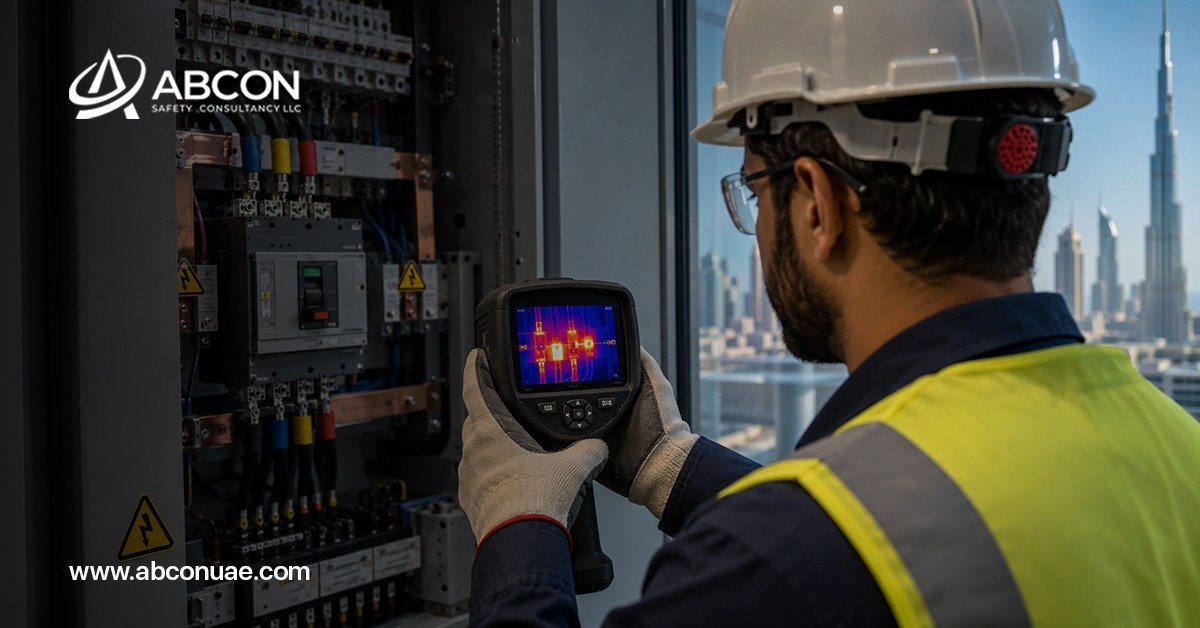
Thermography inspection (also called infrared thermal imaging or thermal scanning) uses a specialized infrared camera to detect and visualize heat signatures across electrical systems, equipment, and structures. Every material and component gives off infrared radiation proportional to its temperature — a thermal camera converts that invisible radiation into a color-coded image, where warmer areas appear in red/orange and cooler areas in blue/green.
In an electrical context, this means a qualified thermographer can scan a distribution board, switchgear, cabling, or transformer and immediately identify components running hotter than they should — a telltale sign of a developing fault — without shutting down the system or opening a single panel unnecessarily.
How Thermography Detects Electrical Faults Before They Cause Fires
1. Loose or Corroded Connections
A loose terminal or corroded connection increases electrical resistance at that point, generating localized heat that thermal imaging picks up immediately — often long before insulation begins to degrade or visible discoloration appears.
2. Overloaded Circuits
When a circuit carries more load than it's rated for, components run hotter than normal across the entire load path. Thermography reveals this pattern clearly, allowing facility teams to rebalance loads before cabling or breakers are damaged.
3. Failing Components
Circuit breakers, fuses, and switchgear nearing end-of-life often show abnormal heat signatures well before they fail outright. Catching this early turns an emergency replacement into a planned maintenance task.
4. Phase Imbalance
In three-phase systems, uneven load distribution across phases shows up as inconsistent heat patterns between phases — a common and often overlooked cause of long-term equipment degradation.
5. Insulation Breakdown
Degraded insulation increases resistance and heat at specific points along cabling, which thermal imaging can flag before the insulation fails completely and creates an arc flash or short-circuit risk.
Each of these faults, left undetected, is a plausible ignition source. Catching them at the thermal-signature stage before smoke, sparking, or visible damage is the entire value proposition of thermographic inspection.
Why Thermography Matters for UAE Businesses Specifically
The UAE's climate and infrastructure density make electrical thermal risk particularly relevant:
High ambient temperatures in summer months push electrical systems closer to their thermal limits year-round, reducing the margin for error on already-stressed components
Dense commercial and industrial facilities — malls, hotels, warehouses, and factories — carry heavy electrical loads across extensive distribution networks, increasing the number of potential failure points
Insurance and regulatory expectations: UAE insurers increasingly request documented thermographic survey reports as a condition of coverage or renewal for commercial and industrial properties, and civil defence authorities treat proactive electrical inspection as a core fire-prevention measure
An EIAC-accredited safety consultancy conducting your thermography inspection ensures the resulting report is recognized by insurers, auditors, and civil defence authorities an in-house or unaccredited scan may catch the same faults but won't carry the same regulatory weight.
What to Expect From a Professional Thermography Inspection
Pre-inspection review — the thermographer reviews your facility's electrical load and prioritizes high-risk areas (main distribution boards, switchgear, motor control centers, transformers)
Live thermal scanning — inspection is typically conducted while systems are under normal operating load, since heat anomalies only appear when a circuit is active
Data analysis and reporting — thermal images are analyzed against baseline temperature differentials to classify findings by severity (minor, moderate, critical)
Actionable recommendations — a proper report doesn't just flag hot spots, it prioritizes them by urgency so your maintenance team knows what to fix first
Documentation for compliance — a certified report can be submitted to insurers, civil defence, or internal audit teams as evidence of proactive risk management
How Often Should You Schedule a Thermography Inspection?
Facility Type | Recommended Frequency |
|---|---|
Industrial/manufacturing facilities | Annually, or bi-annually for critical systems |
Commercial buildings (malls, offices) | Annually |
Hotels and hospitality | Annually, aligned with civil defence renewal cycles |
Data centers and critical infrastructure | Bi-annually or quarterly for high-load equipment |
Post-major electrical work | Immediately after installation or modification |
Facilities with older electrical infrastructure, high load variability, or a history of electrical faults should lean toward the more frequent end of these ranges.
Best Practices Checklist Before Booking a Thermography Inspection
Confirm the provider is EIAC-accredited for inspection and conformity assessment services
Ensure the inspection is scheduled while systems are under normal operating load
Request a report that classifies findings by severity, not just raw thermal images
Ask whether follow-up verification scans are included after remediation work
Check if the report format meets your insurer's or civil defence documentation requirements
Schedule inspections on a consistent annual (or more frequent) cycle rather than reactively
Frequently Asked Questions
1. Does thermography inspection require shutting down electrical systems?
No thermal imaging is a non-invasive, non-contact inspection method that works best while systems are under normal operating load, meaning it can typically be conducted without any downtime or shutdown.
2. How long does a thermography inspection take?
Duration depends on facility size and the number of panels or equipment items being scanned, but a standard commercial facility inspection typically takes a few hours to a full day.
3. Is a thermography report accepted by UAE insurers and civil defence?
Reports from an EIAC-accredited safety consultancy are generally recognized by insurers and regulatory authorities as valid documentation of proactive electrical risk management, though specific acceptance criteria can vary by insurer.
4. Can thermography detect faults that a visual inspection would miss?
Yes that's the core advantage. Thermal imaging identifies heat anomalies inside enclosed panels, behind covers, and within connections that show no visible external signs of a developing fault.
5. What happens after a thermography inspection identifies a hot spot?
Findings are classified by severity, and critical issues typically require immediate remediation (often within days), while moderate findings are scheduled into planned maintenance. A follow-up scan after repairs confirms the fault has been resolved.
Final Thoughts: Prevention Is Cheaper Than a Fire Investigation
Electrical fires are almost always preceded by a detectable thermal signature the failure isn't sudden, it's just invisible until someone looks with the right equipment. A consistent thermography inspection schedule turns an unpredictable fire risk into a manageable, budgeted maintenance item, and gives you documented proof of due diligence if an insurer or auditor ever asks.
Ready to identify hidden electrical risks in your facility before they become a fire? Get in touch for an EIAC-accredited thermography inspection tailored to your facility type and risk profile because the best time to find a fault is before it finds you.