'/%3E%3Cpath d='M30 0v30M0 15h60' stroke='%23FFF' stroke-width='10'/%3E%3Cpath d='M30 0v30M0 15h60' stroke='%23C8102E' stroke-width='6'/%3E%3C/svg%3E)
Pressure Vessel Inspection
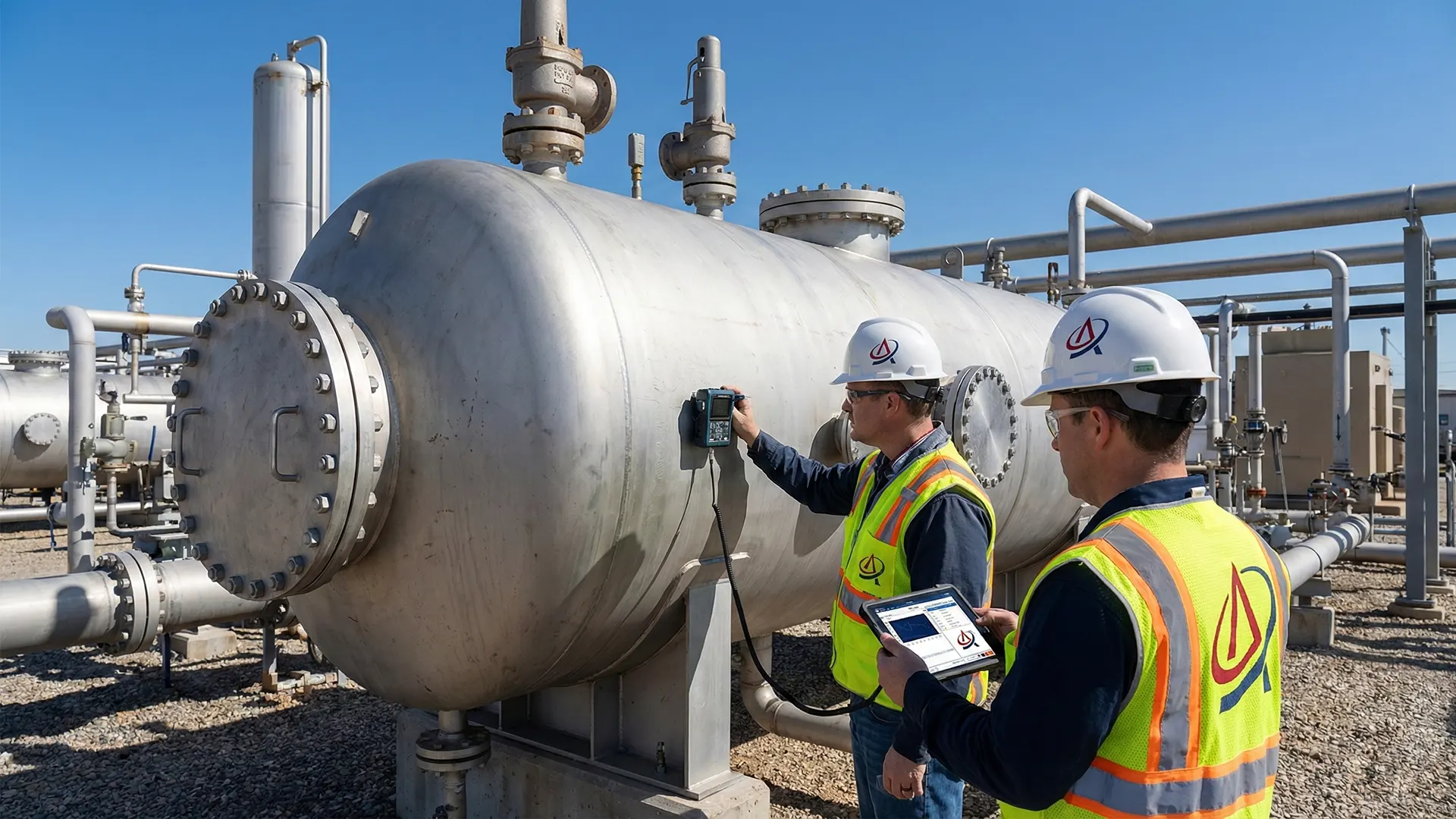
Pressure Vessel Inspection ensures the safety, structural integrity, and compliance of air receivers, tanks, and pressure-bearing equipment. The inspection checks for corrosion, leaks, wall thickness loss, valve performance, and pressure resistance to prevent failures and operational hazards.
Pressure Vessel Inspection ensures the safety, structural integrity, and compliance of air receivers, tanks, and pressure-bearing equipment. The inspection checks for corrosion, leaks, wall thickness loss, valve performance, and pressure resistance to prevent failures and operational hazards.
Pressure Vessel Inspection is a mandatory safety requirement designed to verify the strength, reliability, and safe operation of equipment that stores or handles pressurized air, gases, or liquids. These vessels operate under high pressure, making regular inspection essential to detect corrosion, thinning, cracks, weld defects, leaks, or safety valve failures that could lead to catastrophic incidents.
Our Pressure Vessel Inspection process includes both internal and external assessments using industry-approved methods such as visual examination, ultrasonic thickness measurement, hydrostatic testing, and safety valve calibration. We check shell plates, weld seams, end caps, supports, nozzles, pressure gauges, drain points, and protective coatings to ensure each component meets the required safety and performance standards.
Hydrostatic testing is performed to confirm the vessel’s pressure-holding capacity by subjecting it to controlled water pressure to identify weak points or potential failure areas. Safety devices such as relief valves and pressure control systems are tested to ensure proper operation during abnormal pressure conditions. All findings are documented with detailed reports and certification in accordance with regulatory guidelines and engineering codes.
By conducting regular Pressure Vessel Inspections, you ensure operational safety, reduce downtime, extend the lifespan of critical equipment, and maintain full compliance with mandatory safety regulations.
Scope of Work
Detailed breakdown of our comprehensive inspection services, methodologies, and deliverables
Air Compressor Hydro Testing
Hydro testing verifies the structural integrity of the air compressor tank by pressurizing it with water to check for leaks, weaknesses, or pressure-related failures.
Air Compressor
Inspection covers tank condition, pressure relief valves, hoses, gauges, and operational safety to ensure reliable performance and safe air storage.
Diesel Tank
Assessed for corrosion, leaks, structural integrity, venting systems, and contamination to ensure safe fuel storage and prevent environmental hazards.