'/%3E%3Cpath d='M30 0v30M0 15h60' stroke='%23FFF' stroke-width='10'/%3E%3Cpath d='M30 0v30M0 15h60' stroke='%23C8102E' stroke-width='6'/%3E%3C/svg%3E)
Torque Verification
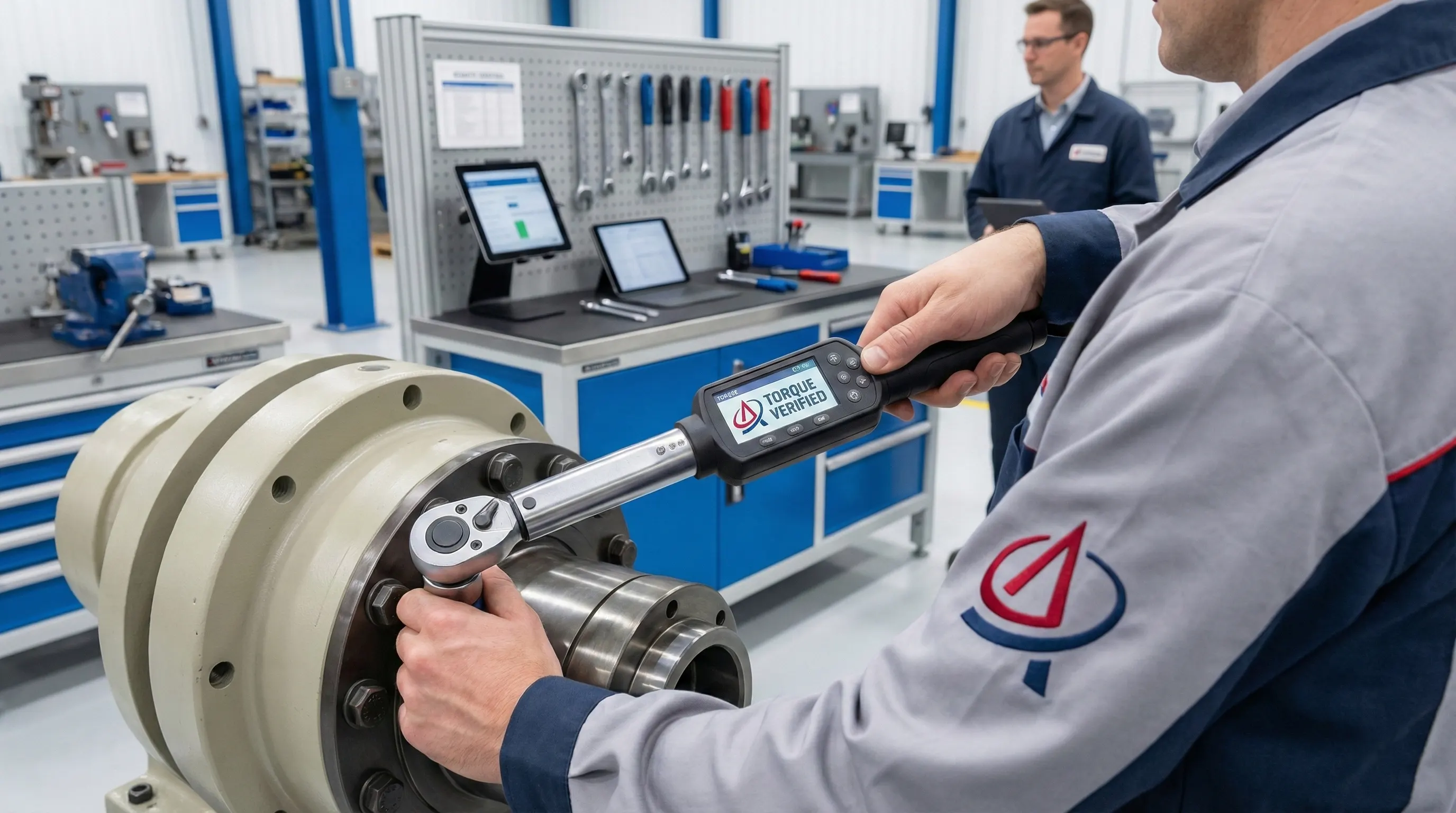
Torque Verification Inspection ensures that all critical bolts, fasteners, and mechanical joints are tightened to the correct torque values as per engineering specifications. This prevents loosening, mechanical failure, and safety hazards during operation.
Torque Verification Inspection ensures that all critical bolts, fasteners, and mechanical joints are tightened to the correct torque values as per engineering specifications. This prevents loosening, mechanical failure, and safety hazards during operation.
Torque Verification Inspection is a crucial quality-control process used to confirm that bolts, fasteners, and mechanical connections have been tightened according to the required torque specifications. Proper torque application is essential for maintaining the structural integrity, reliability, and safety of equipment across industrial, construction, mechanical, and offshore environments. Incorrect torque can lead to loosening, component fatigue, leaks, machinery vibration, or catastrophic failure.
Our inspection process includes verifying torque values using calibrated torque tools and comparing results against engineering drawings, OEM specifications, and safety standards. We check for over-tightening, under-tightening, uneven tightening patterns, and joint alignment issues. This ensures each connection can withstand operational loads, pressure variations, and environmental conditions.
Torque verification is performed on critical systems such as flanges, mechanical joints, rotating equipment, structural assemblies, lifting equipment, pipelines, and heavy machinery. After inspection, a detailed report is provided with torque measurements, non-conformances, corrective actions, and final certification. This helps ensure safe operation, reduce the risk of mechanical failure, and maintain compliance with project and regulatory requirements.