'/%3E%3Cpath d='M30 0v30M0 15h60' stroke='%23FFF' stroke-width='10'/%3E%3Cpath d='M30 0v30M0 15h60' stroke='%23C8102E' stroke-width='6'/%3E%3C/svg%3E)
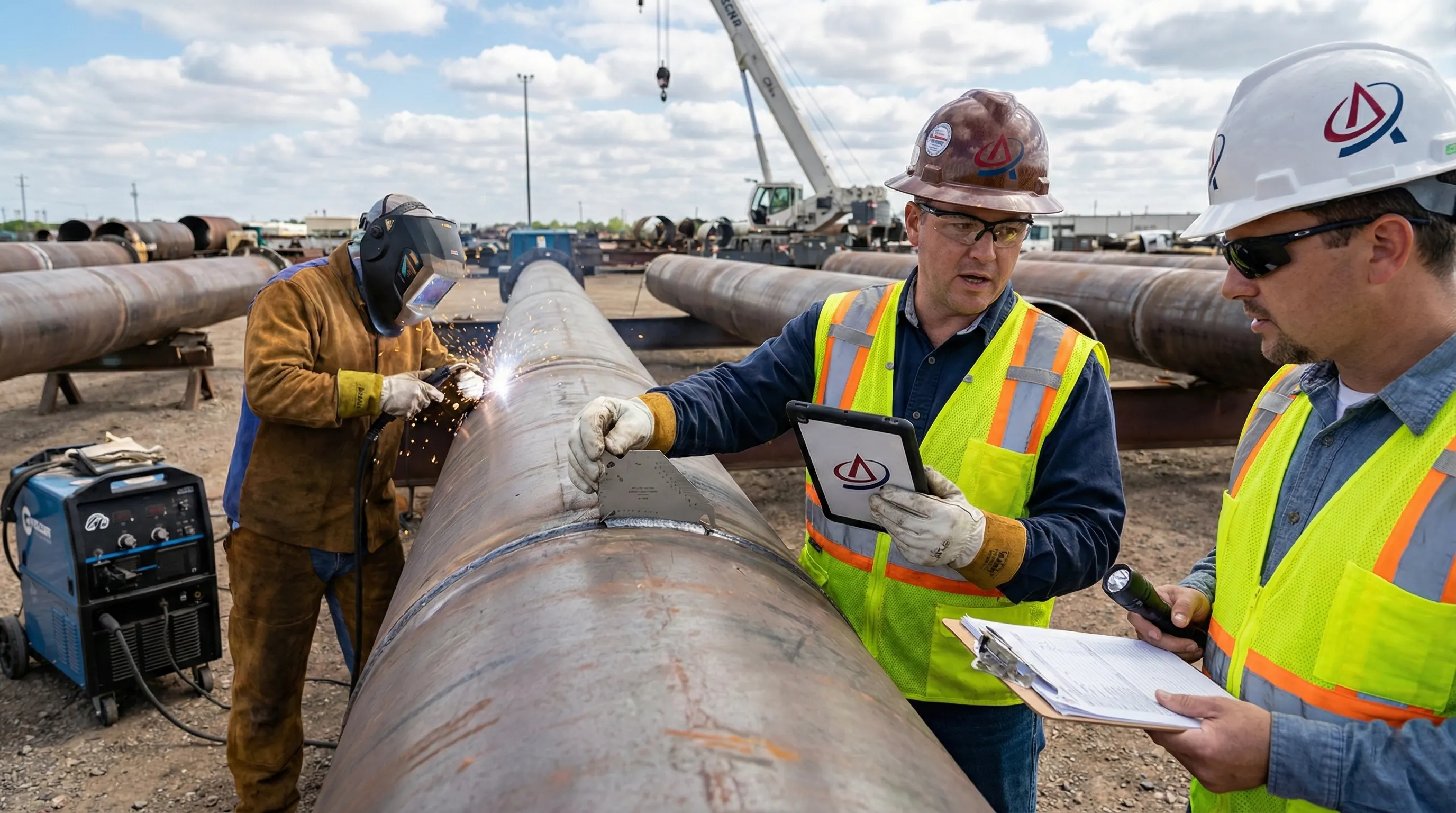
Welding Inspection
Welding Mandatory Inspection ensures the strength, quality, and safety of welded joints through visual checks and certified testing methods. It identifies defects such as cracks, porosity, undercuts, and improper fusion to maintain structural integrity and compliance with industry standards
Welding Mandatory Inspection ensures the strength, quality, and safety of welded joints through visual checks and certified testing methods. It identifies defects such as cracks, porosity, undercuts, and improper fusion to maintain structural integrity and compliance with industry standards
Welding Mandatory Inspection is a crucial process designed to verify the quality, reliability, and safety of welded structures used across construction, industrial, offshore, and lifting operations. This inspection ensures every weld meets regulatory requirements, engineering specifications, and international safety standards. By examining weld appearance, penetration, alignment, and structural soundness, the inspection helps prevent failures that could lead to accidents, equipment damage, or downtime.
Our certified welding inspectors carry out thorough assessments using recognized methods such as Visual Welding Inspection (VT), Magnetic Particle Inspection (MPI), Dye Penetrant Testing (PT), and Ultrasonic Testing (UT), depending on the project requirements. These techniques allow us to detect cracks, porosity, slag inclusions, incomplete fusion, misalignment, and other critical defects that compromise weld performance. We also verify material compatibility, joint preparation, heat-affected zones, and compliance with approved Welding Procedure Specifications (WPS).
A detailed report is provided with clear findings, photographs, recommendations, and certification to ensure full compliance. As part of your mandatory safety protocol, Welding Inspection helps improve structural reliability, extend the lifespan of equipment, and ensure safe operation in demanding environments.