'/%3E%3Cpath d='M30 0v30M0 15h60' stroke='%23FFF' stroke-width='10'/%3E%3Cpath d='M30 0v30M0 15h60' stroke='%23C8102E' stroke-width='6'/%3E%3C/svg%3E)
Understanding NDT: How Non-Destructive Testing Saves Machinery Life
Machinery looks solid on the outside, but hidden microscopic cracks or internal corrosion can lead to catastrophic failure. Non-Destructive Testing (NDT) is the industrial equivalent of an X-ray, allowing you to see inside your equipment without damaging it. Learn how regular NDT inspections not only ensure UAE regulatory compliance but also significantly extend the lifespan of your expensive machinery
Machinery looks solid on the outside, but hidden microscopic cracks or internal corrosion can lead to catastrophic failure. Non-Destructive Testing (NDT) is the industrial equivalent of an X-ray, allowing you to see inside your equipment without damaging it. Learn how regular NDT inspections not only ensure UAE regulatory compliance but also significantly extend the lifespan of your expensive machinery
Introduction
In the demanding industrial sectors of the UAE—construction, marine, and oil & gas—heavy machinery is the backbone of operations. Cranes lift massive loads, pressure vessels contain hazardous substances, and pipelines transport critical resources across extreme distances.
It’s easy to assume that if a machine looks fine today, it will perform the same tomorrow. However, in the harsh Gulf environment—marked by extreme heat, humidity, salt exposure, and sand—hidden degradation occurs every single day.
This is where Non-Destructive Testing (NDT) becomes essential. NDT separates reactive repairs after a failure from proactive maintenance that prevents disasters. At ABCON Safety Consultancy, we view NDT not merely as an inspection—but as a strategic tool for asset protection, safety, and cost control.
What Is Non-Destructive Testing (NDT)?
Non-Destructive Testing is a group of inspection techniques used to evaluate the integrity of materials, components, or structures without causing any damage.
Unlike destructive testing—where samples are stressed until failure—NDT keeps equipment fully operational after inspection. Think of it as an industrial MRI or X-ray: it reveals internal defects invisible to the naked eye, without interrupting operations.
The Invisible Threats NDT Detects
Machinery failure rarely happens suddenly. It usually begins with microscopic defects that grow over time due to fatigue, load stress, corrosion, and environmental exposure.
NDT is designed to detect these silent threats early, including:
Micro-cracks: Tiny fractures in welds or metal surfaces that expand under load
Internal corrosion: Wall thinning in pipelines, tanks, and pressure vessels
Porosity: Air pockets trapped within castings or welds that reduce strength
Laminations: Layer separations within metal plates that compromise integrity
How NDT Extends Machinery Life—and Saves Money
Regular NDT inspections cost a fraction of emergency repairs or equipment replacement. Here’s how NDT directly protects your bottom line:
1. Early Defect Detection = Lower Repair Costs
Identifying a hairline crack in a crane hook early may only require a minor repair or component replacement. If left undetected, that same crack can lead to catastrophic failure—damaging equipment, halting projects, and risking lives. NDT enables timely, controlled intervention.
2. Extending the Safe Working Life of Equipment
While machinery has a design lifespan, NDT allows you to scientifically verify structural integrity. This enables companies to safely operate high-value assets beyond their expected service life—delaying expensive capital investments.
3. Predictive Maintenance Instead of Emergency Shutdowns
NDT generates actionable data. For example, ultrasonic testing can reveal gradual pipe wall thinning over time, allowing maintenance teams to forecast replacement schedules instead of reacting to sudden failures.
Common NDT Methods Used in UAE Industries
At ABCON Safety Consultancy, our certified inspectors select the most effective method based on equipment type and defect risk:
Visual Testing (VT): The first inspection layer, performed by trained professionals to identify surface defects
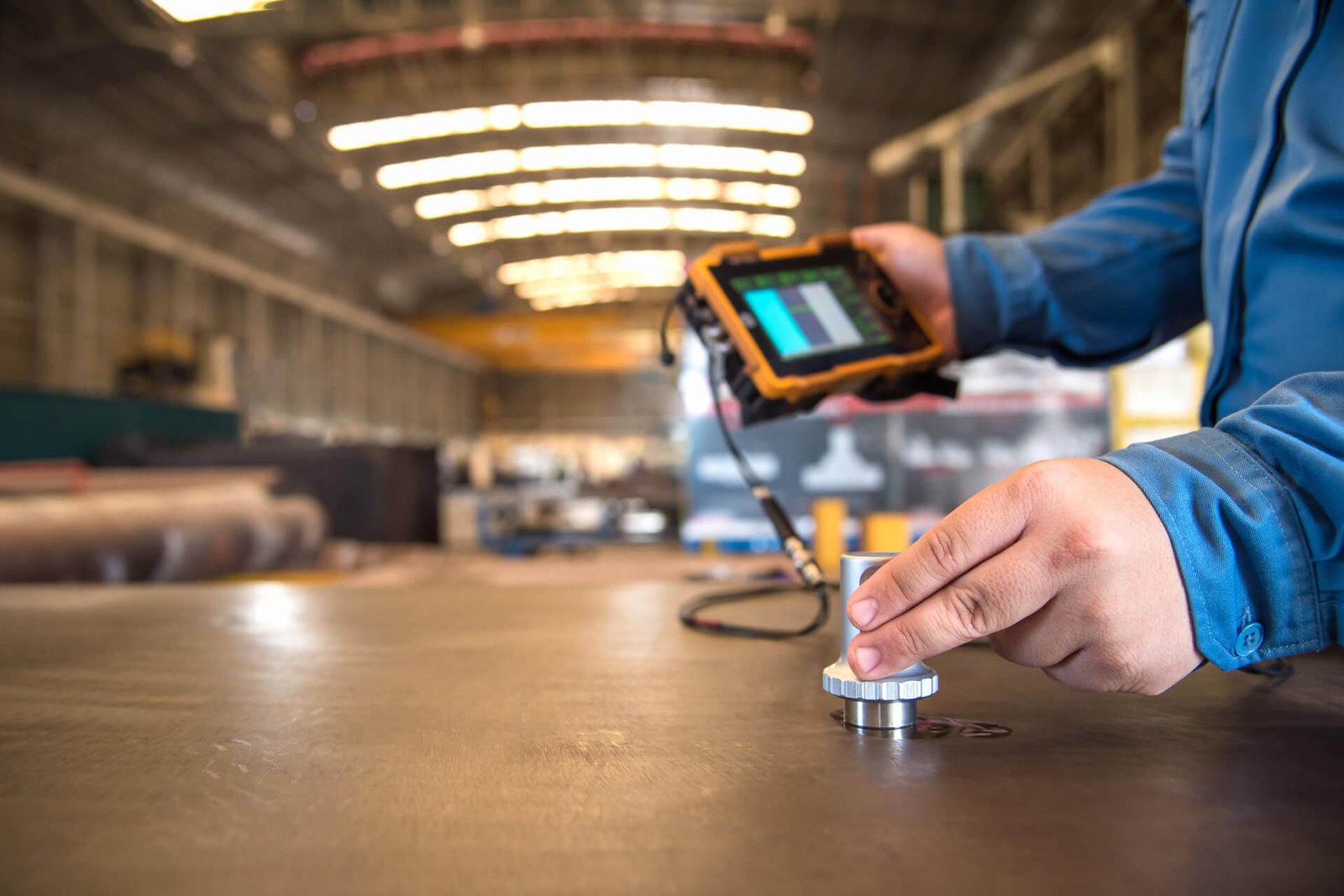
Ultrasonic Testing (UT): Uses sound waves to detect internal flaws and measure thickness loss—critical for tanks and pipelines
Magnetic Particle Testing (MT): Ideal for identifying surface and near-surface cracks in ferromagnetic materials like steel
Dye Penetrant Testing (PT): A cost-effective technique for detecting surface-breaking defects in non-porous materials
Conclusion: Confidence You Can Trust
When an operator steps into a crane cabin or a system is pressurized, there must be absolute confidence in equipment safety. Non-Destructive Testing provides that assurance—backed by science, not assumptions.
Don’t leave heavy machinery safety to chance. Partner with ABCON Safety Consultancy for professional Third-Party Inspection and NDT services. Our accredited experts use advanced technology to ensure your equipment remains compliant, reliable, and built for long-term performance.
Is your machinery due for a health check? Contact ABCON today to schedule a consultation for your NDT requirements.