'/%3E%3Cpath d='M30 0v30M0 15h60' stroke='%23FFF' stroke-width='10'/%3E%3Cpath d='M30 0v30M0 15h60' stroke='%23C8102E' stroke-width='6'/%3E%3C/svg%3E)
A Complete Guide to Safety Compliance in the UAE: Training, Consultancy & Inspection
This guide covers the four core pillars of UAE workplace safety compliance — HSE consultancy, first aid training, ADM approved equipment inspection, and glass barriers inspection and explains how businesses get the most protection by treating them as one integrated safety strategy rather than separate services.
This guide covers the four core pillars of UAE workplace safety compliance — HSE consultancy, first aid training, ADM approved equipment inspection, and glass barriers inspection and explains how businesses get the most protection by treating them as one integrated safety strategy rather than separate services.
Workplace safety compliance in the UAE has evolved significantly over the past few years. What was once a fragmented set of requirements handled reactively a training course here, an inspection there has become an interconnected regulatory landscape that businesses need to navigate proactively, not after an audit forces the issue.
Whether you're managing workplace emergency preparedness or ensuring your building's structural safety meets regulatory standards, working with the right partners across HSE consultancy, first aid training, third-party equipment inspection, and specialized structural inspection is essential to staying compliant and, more importantly, protecting your people.
This guide breaks down the four pillars of safety compliance every UAE business should understand heading into 2026 and how they connect to form a complete safety strategy rather than a set of disconnected checkboxes.
1. HSE Consultancy: The Foundation of Ongoing Compliance
Health, Safety, and Environment (HSE) consultancy forms the backbone of any serious compliance strategy. Rather than addressing safety issues one incident or audit at a time, effective HSE consultancy services in UAE provide businesses with ongoing risk assessment, regulatory guidance, and audit-ready documentation across their operations.
For businesses operating in construction, oil & gas, manufacturing, or facilities management, HSE consultancy typically covers:
Site-specific risk assessments tailored to actual operational hazards
Regulatory compliance audits aligned with Dubai Municipality, Abu Dhabi Municipality, Trakhees, and ADNOC frameworks
Ongoing advisory support for tender documentation and regulatory submissions
Workforce safety culture development, not just documentation
The businesses that benefit most from HSE consultancy are those that treat it as a continuous partnership rather than a one-time engagement. Regulations evolve, operations scale, and new risks emerge a static safety plan from two years ago rarely reflects a business's current reality.
2. First Aid Training: Preparedness That Can't Wait for an Emergency
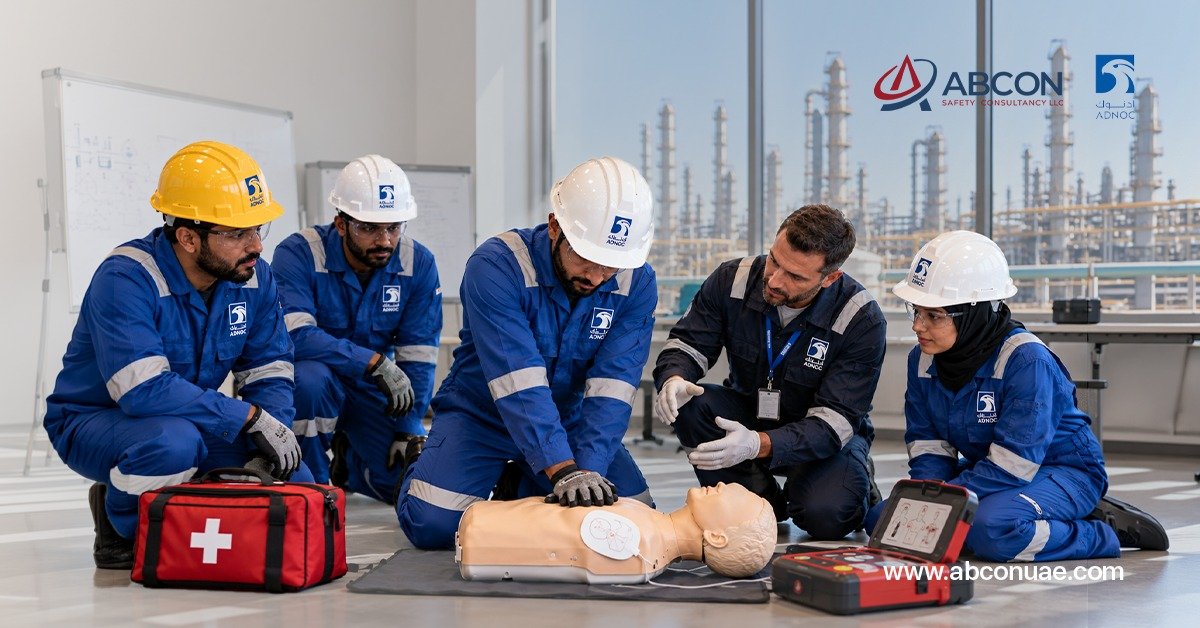
No amount of consultancy or inspection eliminates the possibility of a workplace emergency entirely. This is why First Aid Training UAE providers focused on practical, hands-on instruction remain one of the most critical and most frequently underinvested components of workplace safety.
Effective first aid training goes well beyond satisfying a compliance minimum. Programs should cover CPR, AED operation, and emergency patient assessment through realistic simulation, along with response protocols for burns, fractures, choking, severe bleeding, and shock. Regulatory bodies across the UAE increasingly expect certified first responders on-site at all times, not just theoretical training records filed away for audit purposes.
The distinction between a genuinely prepared workforce and one that merely holds certificates often comes down to how the training was delivered — hands-on, scenario-based instruction consistently outperforms lecture-style courses when a real emergency occurs.
3. Third-Party Equipment Inspection: Verified, Not Just Certified
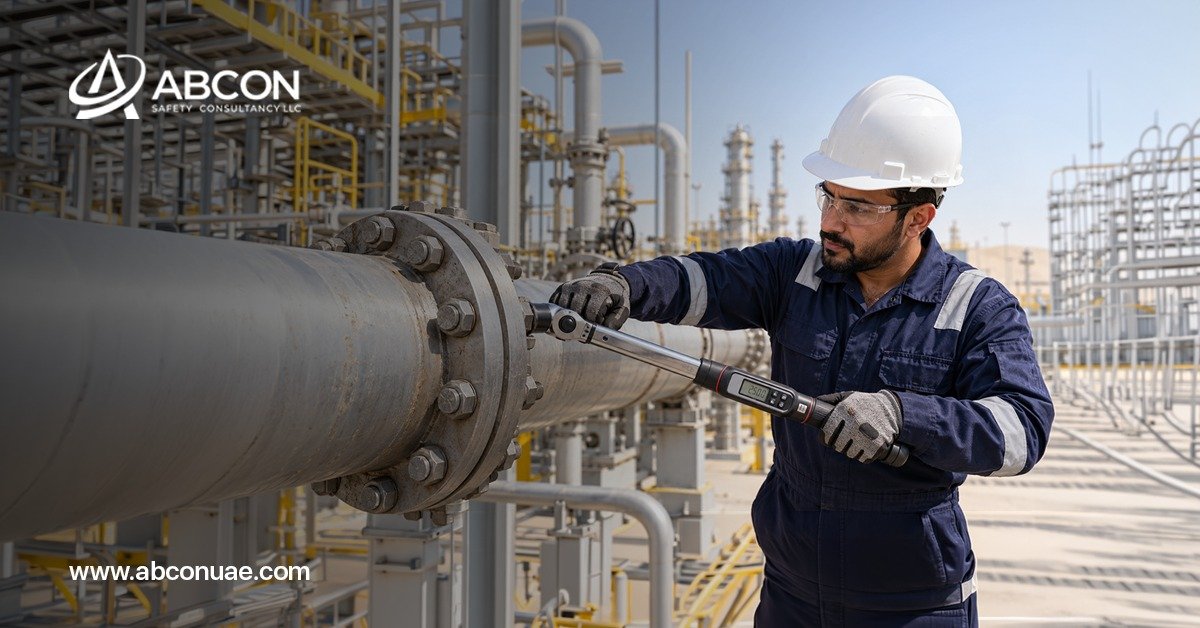
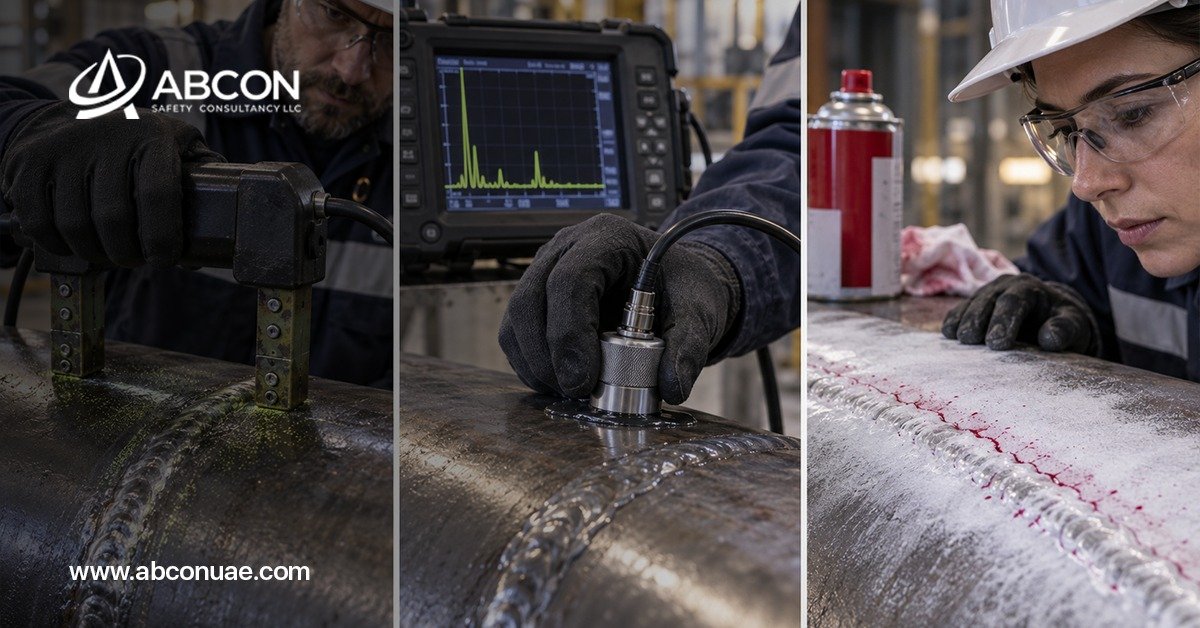
Heavy equipment, lifting machinery, and structural systems require periodic inspection to catch mechanical wear, structural fatigue, or safety risks before they result in failure. But not every inspection carries equal regulatory weight a distinction many businesses only discover after an audit or insurance claim exposes the gap.
ADM approved third party inspection in Abu Dhabi means the inspection is directly recognized by Abu Dhabi Municipality, giving businesses documentation that actually holds up under regulatory scrutiny or insurance review. This matters most for:
Loaders and heavy machinery, typically requiring inspection every 12 months
Lifting equipment such as cranes and hoists, where risk profiles are highest
Structural elements requiring periodic assessment for continued safe operation
Businesses relying on inspection providers without proper accreditation often don't realize the gap until it's too late during a claim dispute, a failed audit, or a tender disqualification that could have been avoided entirely.
4. Glass Barriers Inspection: A Frequently Overlooked Risk
As high-rise construction and modern facade design continue to define Dubai's skyline, structural glass elements balustrades, balcony glazing, curtain wall systems have become a safety category that's often overlooked until an incident or targeted audit brings attention to it.
Glass barriers inspection in Dubai addresses a risk category that's easy to underestimate precisely because glass failures are relatively rare — but when they do occur, the consequences can be severe, particularly on high-rise residential, commercial, and hospitality properties. Regular inspection identifies stress fractures, seal degradation, and mounting issues before they become safety incidents, and increasingly, building management and insurers expect documented, accredited inspection as standard practice rather than an occasional precaution.
How These Four Pillars Work Together
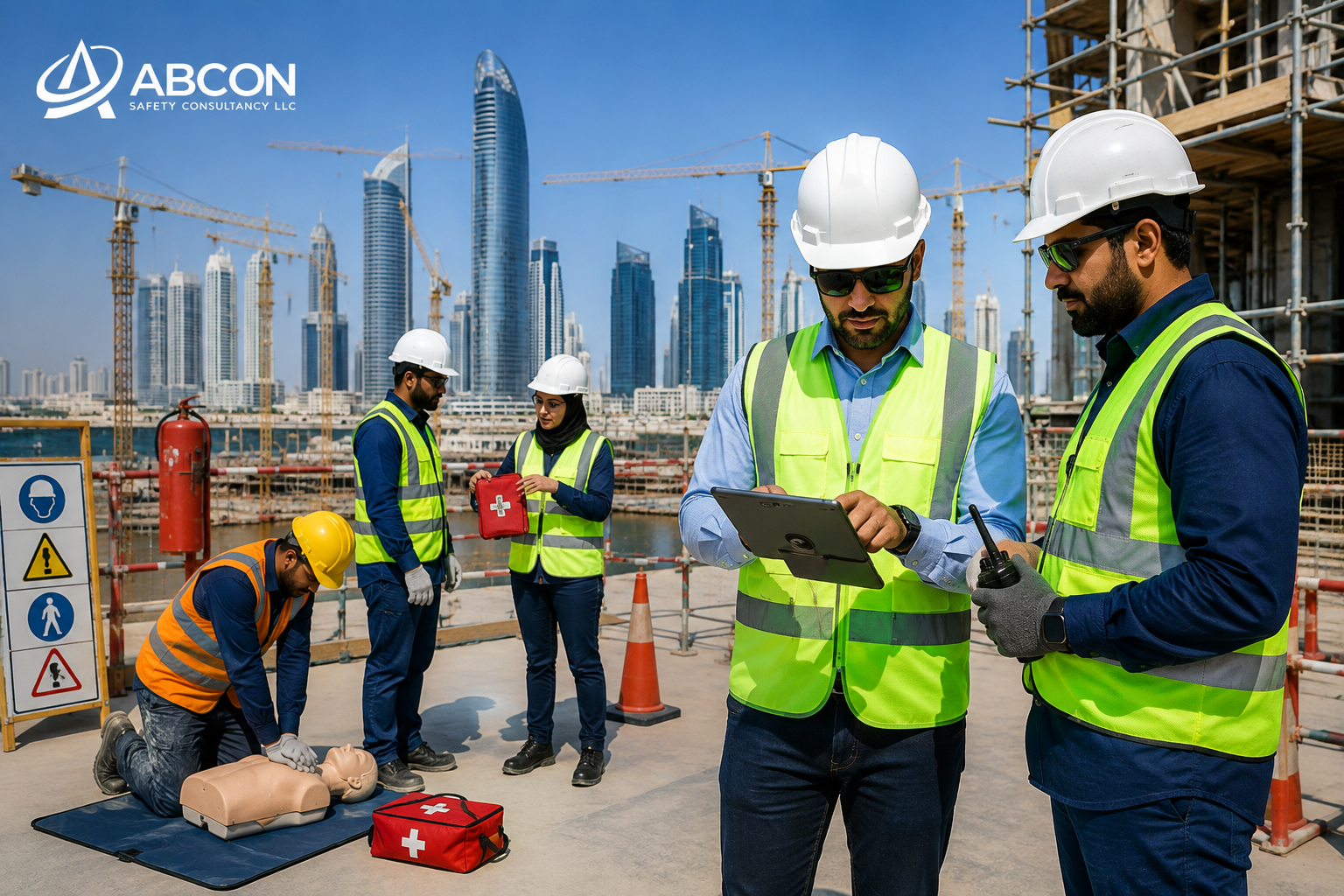
It's tempting to treat HSE consultancy, first aid training, equipment inspection, and structural inspection as separate line items — different services, different vendors, different budgets. In practice, businesses that get the most value from their safety investment treat these as an integrated strategy rather than isolated purchases.
Consider how they connect:
HSE consultancy identifies where risks exist across your operations, informing what training and inspection priorities actually matter for your specific business.
First aid training ensures your workforce can respond effectively when consultancy-identified risks materialize into real incidents.
Equipment and structural inspection provide the verified documentation that protects your business during audits, insurance claims, and tender evaluations closing the loop between identified risk and demonstrated compliance.
A business investing heavily in one pillar while neglecting the others typically discovers the gap at the worst possible time a first-aid-ready workforce doesn't help if uninspected equipment fails, and thorough equipment inspection doesn't compensate for a workforce unprepared to respond when something does go wrong.
Aligning With International Standards
For businesses looking to benchmark their overall safety strategy against globally recognized frameworks, the ISO 45001 occupational health and safety standards provide a useful international reference point helpful not just for internal planning, but for demonstrating credibility to multinational clients and partners who expect safety practices aligned with global standards, not just local minimums.
Building a Safety Strategy That Actually Holds Up
Heading into 2026, UAE businesses face a regulatory environment that continues to reward proactive, integrated safety planning and increasingly penalizes reactive, fragmented approaches. The businesses best positioned for sustainable growth aren't necessarily those spending the most on compliance they're the ones ensuring their consultancy, training, and inspection efforts actually work together as a coherent strategy.
If you're currently reviewing your organization's approach to safety compliance, it's worth starting with a simple audit: do your HSE consultancy, first aid training, and inspection processes reflect a genuine, integrated safety strategy or are they still operating as disconnected checkboxes?
ABCON provides HSE consultancy, First Aid Training, ADM approved third-party inspection, and glass barriers inspection across Dubai and Abu Dhabi. Learn more at www.abconuae.com.