'/%3E%3Cpath d='M30 0v30M0 15h60' stroke='%23FFF' stroke-width='10'/%3E%3Cpath d='M30 0v30M0 15h60' stroke='%23C8102E' stroke-width='6'/%3E%3C/svg%3E)
Heat Stress Safety Training: Protecting UAE Workers in Summer
Outdoor workers in the UAE face life-threatening heat stress risks every summer. This blog covers the types of heat-related illnesses, MOHRE's midday work ban rules, and the six key modules of a certified Heat Stress Safety Training programme plus practical prevention tips every worksite should follow.
Outdoor workers in the UAE face life-threatening heat stress risks every summer. This blog covers the types of heat-related illnesses, MOHRE's midday work ban rules, and the six key modules of a certified Heat Stress Safety Training programme plus practical prevention tips every worksite should follow.
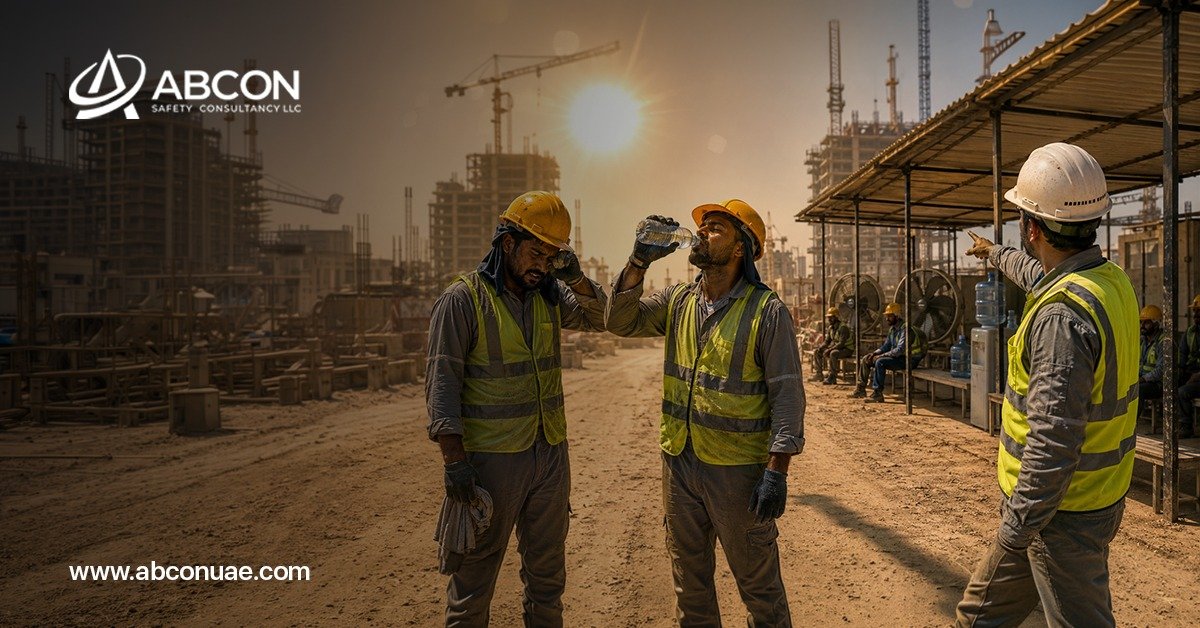
The UAE summer is relentless. With temperatures regularly exceeding 45–48°C and humidity levels making it feel even hotter, outdoor workers particularly those in construction, oil & gas, and logistics face serious, life-threatening risks from heat stress. Heat Stress Safety Training is no longer just a regulatory requirement; it is the single most important tool employers can provide their workforce during the summer months.
KEY STATISTICS
48°C — Peak Summer Temperature in UAE
12:30–3PM — Outdoor Work Ban Period (June–Sept)
AED 5,000+ — Fine Per Worker for Non-Compliance
What Is Heat Stress?
Heat stress occurs when the body is unable to regulate its core temperature through normal cooling mechanisms such as sweating. When the environment is too hot or humid or when a worker is physically exerting themselves in extreme heat the body's internal temperature rises to dangerous levels, leading to a spectrum of heat-related illnesses.
In the UAE, where summer temperatures routinely exceed 45°C with high humidity levels in coastal areas, outdoor workers are at extreme risk without proper training and precautionary measures in place.
⚠ Types of Heat-Related Illnesses
Heat Cramps — Muscle spasms due to fluid loss
Heat Syncope — Fainting from low blood pressure
Heat Exhaustion — Heavy sweating, weakness, dizziness
Heat Stroke — Life-threatening, body temp above 40°C
Rhabdomyolysis — Muscle breakdown from overheating
Dehydration — Leads to impaired judgment & fatigue
UAE Regulations on Outdoor Work in Summer
The UAE Ministry of Human Resources and Emiratisation (MOHRE) enforces a mandatory midday outdoor work ban every year from June 15 to September 15. During this period, outdoor work is strictly prohibited between 12:30 PM and 3:00 PM. Violations can result in significant fines and work stoppages.
📋 Key UAE Summer Work Regulations
Employers must provide workers with shaded rest areas, adequate cold drinking water (at least 250ml every 20 minutes), and proper PPE including cooling vests and breathable work uniforms.
All supervisors and HSE officers must be trained to recognize early signs of heat illness and respond with appropriate first aid before emergency services arrive.
Workers must be acclimatized to heat gradually over 7–14 days before being assigned to full outdoor duties during the summer period.
What Does Heat Stress Safety Training Cover?
A comprehensive Heat Stress Safety Training program equips workers and supervisors with the knowledge and practical skills to prevent, identify, and respond to heat-related emergencies on site.
Module 01 — Understanding Heat Stress How the body regulates temperature and what happens when it fails under extreme UAE heat conditions.
Module 02 — Recognizing Symptoms Early warning signs of heat cramps, heat exhaustion, and heat stroke and how to distinguish between them.
Module 03 — Prevention Measures Hydration strategies, work-rest cycles, PPE selection, and site cooling best practices.
Module 04 — Emergency Response Immediate first aid for heat stroke victims a medical emergency requiring rapid cooling and calling 998.
Module 05 — UAE Legal Compliance MOHRE regulations, midday ban rules, and employer obligations under UAE labour law.
Module 06 — Acclimatization Plans Structured programmes to gradually expose new workers to heat over 7–14 days to build tolerance safely.
Top 5 Ways to Prevent Heat Stress on UAE Worksites
Prevention is always better than cure, especially when it comes to heat stroke, which can be fatal within minutes. Here are the five most critical prevention strategies every UAE employer and worker must implement:
Tip 01 — Hydrate Constantly Drink at least 250ml of cool water every 20 minutes don't wait until you feel thirsty. Avoid caffeine and sugary drinks.
Tip 02 — Schedule Smart Plan the most physically demanding tasks for early morning or evening. Strictly observe the 12:30–3PM outdoor work ban.
Tip 03 — Use Cooling PPE Wear lightweight, breathable, light-coloured clothing. Use cooling vests, neck wraps, and wide-brimmed hats.
Tip 04 — Rest in Shade Take regular breaks in shaded or air-conditioned areas. Never skip rest breaks during hot weather even if work pressure is high.
Tip 05 — Buddy System Implement a buddy check system where workers monitor each other for heat illness symptoms throughout each shift.
Tip 06 — Train Your Team Ensure all site workers and supervisors complete certified Heat Stress Safety Training before the summer season begins.
Who Should Attend Heat Stress Safety Training?
Heat Stress Safety Training is essential for anyone who works in or manages outdoor environments in the UAE during summer. This includes construction workers, site supervisors and foremen, HSE officers, facility management teams, oil & gas field workers, landscaping and maintenance crews, and logistics and delivery personnel.
Flexible group training sessions are available across Dubai and Abu Dhabi with both morning and evening schedules to accommodate operational requirements.
Why Choose a Certified Heat Stress Training Provider?
Working with an experienced HSE training provider ensures your team receives instruction grounded in UAE regulatory requirements and real-world site conditions. The best programmes combine clear classroom instruction with practical demonstrations, ensuring participants don't just learn the theory they walk away with the confidence to act in an emergency. Training certificates should be recognized by major clients and regulatory authorities across Dubai and Abu Dhabi.