'/%3E%3Cpath d='M30 0v30M0 15h60' stroke='%23FFF' stroke-width='10'/%3E%3Cpath d='M30 0v30M0 15h60' stroke='%23C8102E' stroke-width='6'/%3E%3C/svg%3E)
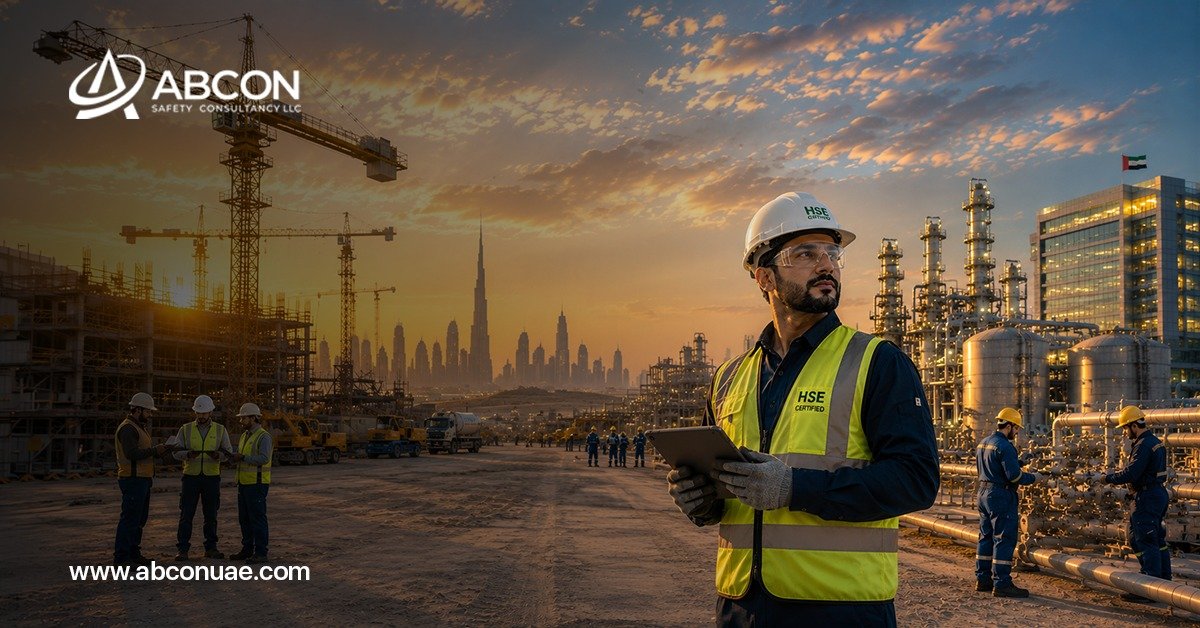
Top 5 Benefits of HSE Certification for Your Career in the UAE
HSE certification in the UAE boosts your career in 5 key ways — higher salary (up to AED 25,000/month), more job opportunities across construction, oil & gas, and logistics, legal job security, global recognition in 180+ countries, and stronger workplace leadership. With UAE safety laws tightening and demand growing, getting certified is one of the smartest career moves you can make right now.
HSE certification in the UAE boosts your career in 5 key ways — higher salary (up to AED 25,000/month), more job opportunities across construction, oil & gas, and logistics, legal job security, global recognition in 180+ countries, and stronger workplace leadership. With UAE safety laws tightening and demand growing, getting certified is one of the smartest career moves you can make right now.
Introduction
The UAE's construction, oil & gas, logistics, and manufacturing sectors are booming — and with that growth comes a critical demand for certified Health, Safety, and Environment (HSE) professionals. Whether you're an experienced technician looking to level up or a fresh graduate exploring high-demand career paths, earning an HSE certification in the UAE could be the single most impactful move you make in 2024.
But why exactly is HSE certification so valuable in the UAE job market? And is it worth the time and investment?
In this guide, we break down the top 5 benefits of HSE certification for your career in the UAE backed by industry demand, salary data, and employer expectations.
What Is HSE Certification?
HSE (Health, Safety, and Environment) certification is a professional credential that validates your knowledge and competency in workplace safety, hazard identification, risk management, and environmental protection. These certifications are issued by internationally accredited bodies and are recognized across industries worldwide, giving certified professionals credibility wherever they choose to work.
In the UAE, HSE-certified professionals are required by law across many industries, making this qualification not just a career booster, but often a legal necessity for employers.
Top 5 Benefits of HSE Certification for Your Career in the UAE
1. Higher Earning Potential and Salary Growth
One of the most immediate and measurable benefits of earning an HSE certification in the UAE is the direct impact on your salary. Employers across Dubai, Abu Dhabi, Sharjah, and beyond consistently pay a premium for certified safety professionals.
According to industry data, HSE officers in the UAE earn an average of AED 6,000 to AED 18,000 per month, depending on experience and the level of certification held. Senior HSE managers with NEBOSH diplomas or equivalent qualifications can command salaries exceeding AED 25,000 per month in large oil & gas or construction firms.
Compare this to non-certified workers in similar technical roles the salary gap is significant. An HSE course in the UAE effectively pays for itself within the first few months of employment.
Keyword placement: HSE certification UAE, HSE officer jobs UAE, HSE course UAE
2. Dramatically Improved Job Prospects Across Industries
The UAE has some of the most stringent workplace safety regulations in the GCC region. Regulatory bodies like Abu Dhabi Occupational Safety and Health Center (OSHAD) and Dubai Municipality mandate that companies maintain certified HSE personnel on-site especially in high-risk industries.
This creates a steady, high-volume demand for HSE-certified professionals across:
Construction and real estate — one of the UAE's largest employing sectors
Oil, gas, and petrochemicals — particularly in Abu Dhabi and Fujairah
Logistics and warehousing — driven by Jebel Ali Port and free zones
Healthcare and pharmaceuticals
Hospitality and facilities management
Holding a recognized health and safety certification in Dubai or the UAE immediately sets your CV apart from hundreds of applicants. Recruitment agencies and HR managers in the UAE specifically filter credentials when screening candidates for HSE roles.
If you're currently employed in a non-safety role, an HSE qualification also opens the door to lateral career moves into dedicated safety positions often with a higher pay grade.
3. Legal Compliance and Job Security
The UAE Federal Law No. 8 of 1980 (UAE Labour Law) and its subsequent amendments place clear obligations on employers to maintain safe working environments. The UAE Vision 2031 and sector-specific regulations (such as those under OSHAD-SF in Abu Dhabi) further tighten requirements for documented safety competency.
For workers, this legal framework translates into job security. Companies that are audited or penalized for non-compliance often face pressure to immediately hire or upskill their safety workforce creating urgent demand for certified HSE officers.
More importantly, being HSE certified means:
You are legally recognized as competent to carry out safety inspections and risk assessments
You are protected professionally if a workplace incident occurs your certification demonstrates due diligence
You are preferred for visa and work permit approvals in safety-specific roles under certain free zone regulations
For expat workers in the UAE, this legal recognition also strengthens your residency stability companies are far less likely to let go of a compliance-critical staff member.
4. Global Recognition and Career Mobility
One of the standout advantages of pursuing a reputable HSE certification in the UAE particularly through internationally accredited bodies like NEBOSH or IOSH is the worldwide recognition these qualifications carry.
A NEBOSH International General Certificate (IGC), for example, is recognized in over 180 countries. This means your qualification doesn't just open doors in the UAE — it gives you career mobility across:
The wider GCC and Middle East (Saudi Arabia, Qatar, Kuwait, Oman)
Europe (particularly the UK, Ireland, Germany)
Southeast Asia (Malaysia, Singapore, Indonesia)
Africa and South Asia (Nigeria, India, Pakistan)
For professionals in the UAE who may be planning to return to their home country or relocate, an internationally recognized occupational health and safety certification ensures your investment travels with you.
This global portability makes HSE one of the most future-proof professional credentials available to workers in the UAE today.
5. Personal Confidence, Leadership, and Workplace Impact
Beyond the financial and professional benefits, HSE certification in the UAE transforms the way you think, communicate, and lead in the workplace. The training equips you with:
Risk assessment and hazard identification skills — enabling you to proactively prevent accidents
Emergency response planning — so you're always prepared for the unexpected
Environmental management knowledge — increasingly important as UAE companies pursue ESG (Environmental, Social, Governance) goals
Communication and reporting skills — enabling you to brief management, conduct toolbox talks, and influence safety culture
Certified HSE professionals are not just rule enforcers they are respected advisors and leaders within their organizations. Many HSE officers go on to become Safety Managers, QHSE Directors, or independent consultants, commanding premium rates and significant organizational influence.
There is also a deeply personal dimension: knowing that your work directly saves lives is a powerful motivator. In high-risk industries like construction or oil & gas, a well-trained HSE officer can mean the difference between a normal workday and a fatal incident.
Who Should Pursue HSE Certification in the UAE?
HSE certification is ideal for:
Construction workers, site supervisors, and project managers
Oil & gas technicians and engineers
Facilities and maintenance professionals
HR and compliance officers seeking to add safety to their portfolio
Fresh graduates targeting high-demand, recession-resistant careers
Expats looking to upgrade their credentials and secure stable UAE employment
No prior safety experience is required for entry-level certifications making these accessible to a wide range of professionals.
Frequently Asked Questions (FAQ)
Q1: Is HSE certification mandatory in the UAE?
While not universally mandatory for all workers, HSE certification is legally required for designated safety officers in many industries under UAE federal and emirate-level regulations. Most large construction, oil & gas, and industrial companies will not hire for safety roles without a recognized HSE qualification.
Q2: Can I study for HSE certification online in the UAE?
Yes. Many accredited providers in the UAE now offer fully online HSE courses, including NEBOSH IGC, IOSH Managing Safely, and OSHA programs. This allows working professionals to study flexibly without interrupting employment.
Q3: How much does HSE certification cost in the UAE?
Costs range from approximately AED 800 to AED 6,000+ depending on the certification level and provider. Entry-level courses like IOSH are at the lower end; NEBOSH Diploma programs are at the higher end. Many providers offer installment/EMI payment options.
Q4: Will HSE certification help me get a job in the UAE as a foreigner?
Absolutely. The UAE employs a large expat workforce, and internationally recognized HSE certifications are highly valued by UAE employers regardless of nationality. These credentials can significantly strengthen your visa application and employment prospects.
Q5: What is the difference between HSE, QHSE, and EHS?
These terms are largely interchangeable in the UAE job market. HSE (Health, Safety & Environment), QHSE (Quality, Health, Safety & Environment), and EHS (Environment, Health & Safety) all refer to the professional domain of workplace safety and environmental compliance. Many job titles use these terms interchangeably.
Conclusion
If you're serious about building a stable, well-paying, and globally respected career in the UAE, HSE certification is one of the smartest investments you can make. From unlocking higher salaries and broader job opportunities to gaining legal recognition and personal confidence the benefits are clear, measurable, and long-lasting.
The UAE's continued infrastructure growth, Expo legacy projects, and energy sector expansion mean that demand for qualified HSE professionals will only intensify in the years ahead. The question isn't whether HSE certification is worth it — it's whether you can afford to wait.