'/%3E%3Cpath d='M30 0v30M0 15h60' stroke='%23FFF' stroke-width='10'/%3E%3Cpath d='M30 0v30M0 15h60' stroke='%23C8102E' stroke-width='6'/%3E%3C/svg%3E)
How to Choose the Right HSE Training Provider in UAE: 7 Things to Check (Regulations, Risks & Best Practices)
Guide for UAE businesses on choosing an HSE training provider, built around 7 checks: accreditation with UAE regulators (KHDA, DCAS, EIAC, Trakhees, ACTVET, RAKEZ), compliance alignment (MOHRE, OSHAD, Dubai Municipality), trainer experience, risk-specific course content, provider track record, delivery flexibility, and cost vs. value.
Guide for UAE businesses on choosing an HSE training provider, built around 7 checks: accreditation with UAE regulators (KHDA, DCAS, EIAC, Trakhees, ACTVET, RAKEZ), compliance alignment (MOHRE, OSHAD, Dubai Municipality), trainer experience, risk-specific course content, provider track record, delivery flexibility, and cost vs. value.
Introduction
Choosing an HSE training provider in UAE is not a decision to make on price alone. Health, Safety, and Environment (HSE) compliance in the UAE is governed by strict federal and emirate-level regulations, and the training certificate your team walks away with needs to actually hold weight with regulators, clients, and insurers.
Every year, thousands of companies across Dubai, Abu Dhabi, and Sharjah enroll employees in HSE courses but not all certificates are treated equally. Some are recognized by the regulatory authorities that actually govern your industry (KHDA, DCAS, EIAC, Trakhees, ACTVET, RAKEZ); others are locally issued and barely acknowledged outside a single free zone. Picking the wrong provider can mean wasted budget, non-compliant paperwork, and in the worst case a workplace incident that proper training could have prevented.
This guide breaks down the 7 things to check before choosing an HSE training provider in UAE, so you can make a decision based on regulation, risk, and real-world outcomes rather than a sales pitch.
1. Check Accreditation with the Authorities That Actually Regulate Your Industry
The single biggest differentiator between HSE training providers in UAE is accreditation specifically, accreditation from the government bodies that regulate your sector. Look for providers that are officially approved by:
KHDA (Knowledge and Human Development Authority) for general safety training
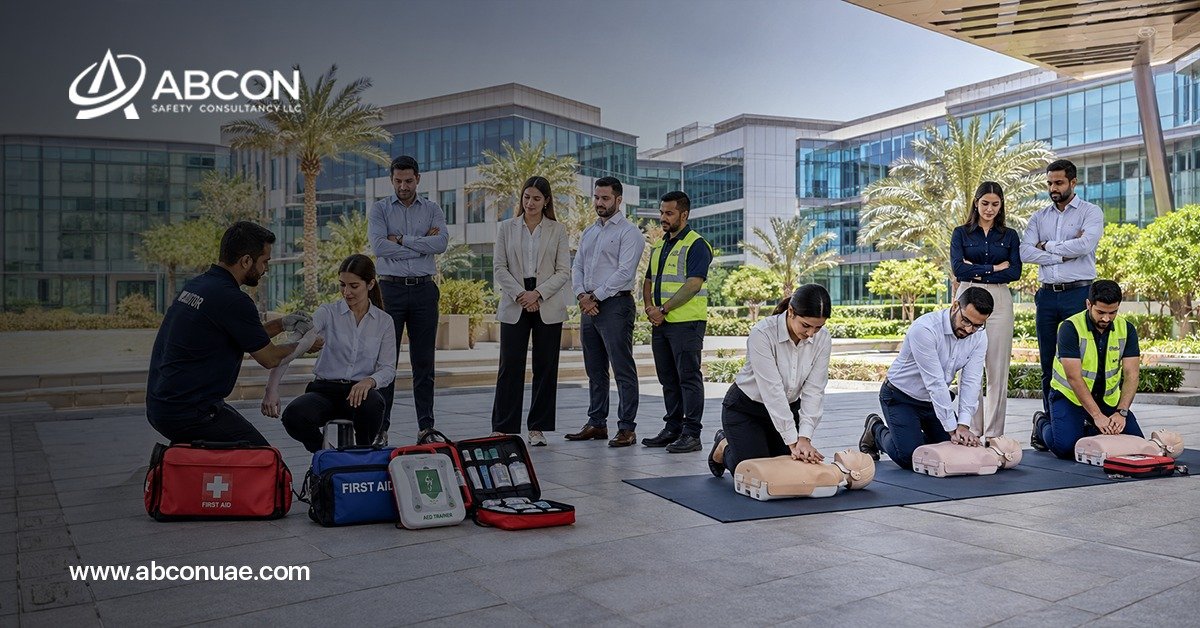
DCAS (Dubai Corporation for Ambulance Services) for first aid and emergency response training
EIAC (Emirates International Accreditation Centre) for inspection and conformity assessment
Trakhees, ACTVET, and RAKEZ for free zone-specific and Abu Dhabi/RAK operations
A legitimate provider will display its accreditation numbers and allow you to verify status directly through the awarding body's public registry — for example, the EIAC directory or the DCAS training provider listing. If a provider cannot show verifiable accreditation from the authority governing your emirate or sector, treat that as a red flag not a discount opportunity.
Why it matters: Many UAE tenders, especially in construction, oil & gas, and facilities management, explicitly require training completed through a KHDA-, DCAS-, or EIAC-accredited provider. A certificate from an unaccredited or unrecognized center can disqualify your bid or fail an audit entirely.
2. Confirm Compliance with UAE Regulatory Bodies
Beyond international accreditation, your provider should align with UAE-specific regulatory frameworks, including:
Ministry of Human Resources and Emiratisation (MOHRE) labor safety guidelines
Dubai Municipality and OSHAD (Abu Dhabi Occupational Safety and Health System) requirements for specific sectors
Civil Defence approvals for fire safety and emergency response training
A reputable HSE training provider in UAE will be transparent about which local authorities recognize their courses, and can advise you on sector-specific mandates (construction, oil & gas, healthcare, hospitality all have different baseline requirements).
3. Evaluate Trainer Experience and Industry Background
A certificate is only as good as the person delivering the training. Ask providers:
Are trainers certified, government-recognized instructors, or subcontracted freelancers?
Do trainers have hands-on industry experience (construction sites, oil rigs, warehouses) or purely academic backgrounds?
What is the trainer-to-participant ratio in practical sessions?
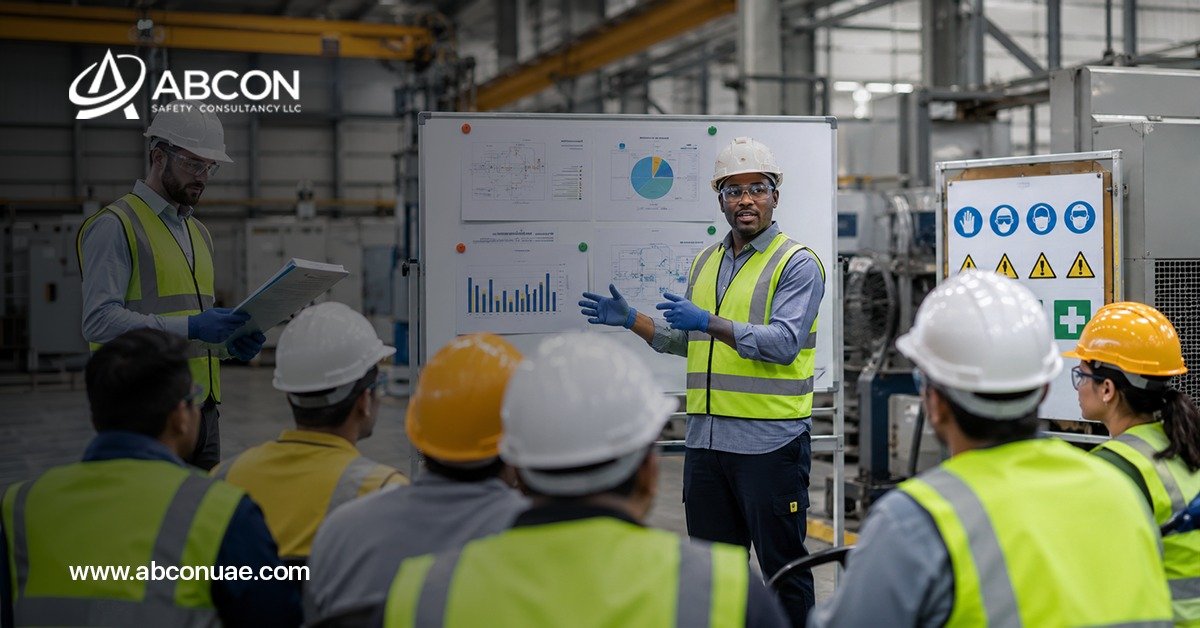
Providers with trainers who've worked on-site in high-risk UAE industries (construction, energy, logistics) bring real incident case studies into the classroom — this is what separates a checkbox certificate from training that actually changes behavior on-site.
4. Assess Course Content: Risk-Specific vs. Generic
Generic, one-size-fits-all HSE courses are common — and often insufficient. The right provider tailors content to your actual risk profile:
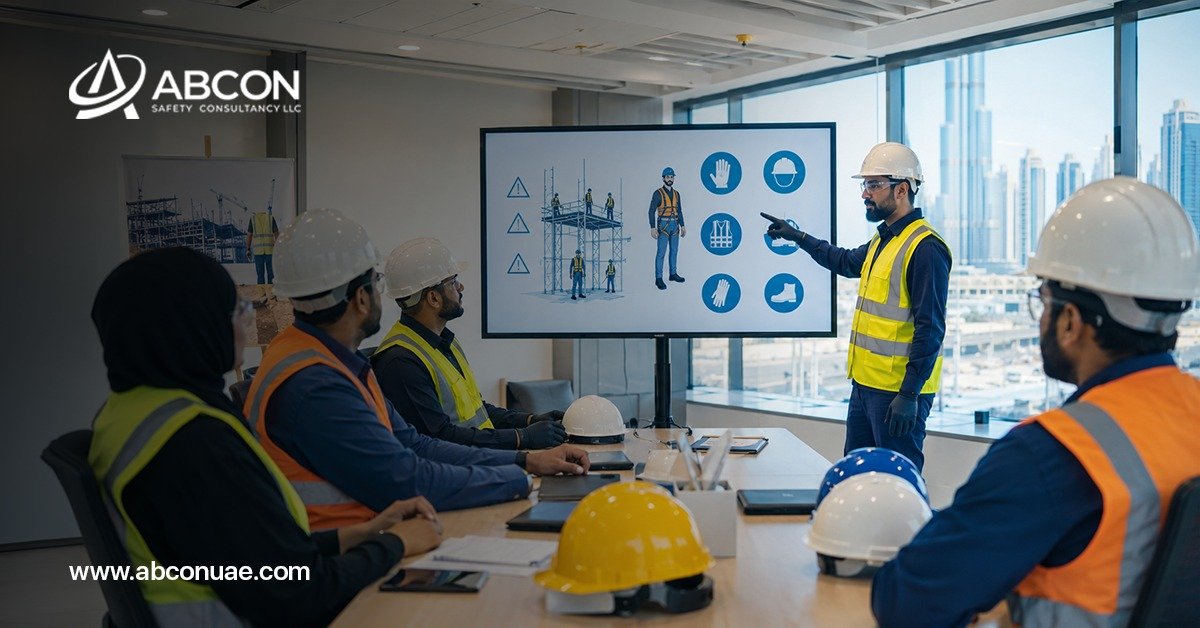
Construction sites need scaffold safety, working-at-height, and confined space modules
Oil & gas facilities need process safety and hazardous materials handling
Offices and retail need fire safety, first aid, and ergonomic risk modules
Ask to see a detailed course syllabus before committing. If a provider offers the exact same curriculum regardless of your industry, that's a sign the training is templated rather than risk-specific a critical gap under UAE's evolving HSE enforcement standards.
5. Review Their Track Record and Client Portfolio
A credible HSE training provider in UAE should be able to share:
Case studies or testimonials from companies in your sector
Total number of certified professionals trained to date
Client retention (do companies come back for refresher and advanced courses?)
Look up independent reviews on Google Business Profile, LinkedIn, and industry forums rather than relying solely on testimonials on the provider's own website. A provider with a decade-long presence and repeat corporate clients across Dubai and Abu Dhabi is generally a safer bet than a newly formed training center offering steep discounts.
6. Check Flexibility: On-Site, Online, and Blended Learning Options
UAE businesses often need training that fits around shift patterns, project deadlines, and multi-site operations. A strong provider should offer:
On-site/in-house training for teams that can't leave operations
Online/live virtual sessions for remote or distributed staff
Blended learning combining self-paced theory with practical, in-person assessments
Flexibility isn't just convenience it affects completion rates. Rigid, classroom-only schedules often lead to partial attendance, which can invalidate certification eligibility.
7. Compare Cost Against Value — Not Just Price
The cheapest HSE training provider in UAE is rarely the best long-term choice. When comparing costs, factor in:
Whether the price includes exam fees, materials, and certification issuance
Retake/resit policies if an employee fails an assessment
Post-training support (refresher sessions, updated regulation briefings)
The real cost of non-compliance if the certificate isn't recognized where it needs to be
A slightly higher upfront cost from an accredited, well-reviewed provider is almost always cheaper than the cost of redoing training after a failed audit or rejected tender submission.
Best Practices Checklist Before You Enroll
Verify accreditation directly with KHDA, DCAS, EIAC, or the relevant free zone authority
Confirm recognition by MOHRE, OSHAD, or Dubai Municipality where relevant
Request trainer CVs and industry background
Ask for a detailed, risk-specific course syllabus
Check independent reviews, not just testimonials
Confirm delivery format fits your team's schedule
Get a full cost breakdown, including retake and certification fees
Frequently Asked Questions
1. What is the most recognized HSE certification in UAE?
Certifications issued by, or accredited through, government authorities such as KHDA, DCAS, and EIAC are the most widely recognized across UAE industries, particularly in construction, oil & gas, and facilities management. Many tenders and multinational employers specifically require training completed through one of these accredited channels.
2. Is online HSE training valid in UAE?
Yes, many accredited providers offer live virtual or blended HSE training that is fully recognized, as long as the regulating authority approves the delivery format and practical assessments are properly conducted.
3. How long does HSE training typically take in UAE?
Duration varies by course level a multi-day HSE program can take 1–2 weeks part-time, while shorter compliance modules (fire safety, first aid) may be completed in a single day. Providers should clearly outline duration before enrollment.
4. Do UAE free zones have their own HSE training requirements?
Some free zones (like JAFZA or DMCC) have additional sector-specific safety induction requirements alongside national and international certifications. Always confirm with your free zone authority in addition to your training provider.
5. How often does HSE certification need to be renewed in UAE?
This depends on the certification body and role. Many safety officer certifications require refresher training every 3 years, while site-specific inductions may need annual renewal. Your provider should flag renewal timelines during enrollment.
Final Thoughts: Choose a Provider That Protects, Not Just Certifies
Selecting the right HSE training provider in UAE comes down to one question: will this training actually reduce risk on your site, or is it just a certificate to file away? Accreditation, regulatory alignment, trainer expertise, and risk-specific content are non-negotiable price and convenience should only matter once those boxes are checked.
Ready to train your team with a provider that ticks every box on this list? Get in touch today for a free consultation and course recommendation tailored to your industry and risk profile because compliance shouldn't be a guessing game.