'/%3E%3Cpath d='M30 0v30M0 15h60' stroke='%23FFF' stroke-width='10'/%3E%3Cpath d='M30 0v30M0 15h60' stroke='%23C8102E' stroke-width='6'/%3E%3C/svg%3E)
UAE Midday Break Law 2026: What Employers Must Do Before September 15
Covers what UAE employers must confirm before the Midday Break ban ends September 15, 2026 recapping core obligations (shade, hydration, shift limits, signage), narrow exemptions, AED 5,000–50,000 penalties, and a 5-point pre-deadline action plan (audit compliance, review documentation, assess heat incidents, plan the transition back to normal hours, and maintain duty of care beyond the ban).
Covers what UAE employers must confirm before the Midday Break ban ends September 15, 2026 recapping core obligations (shade, hydration, shift limits, signage), narrow exemptions, AED 5,000–50,000 penalties, and a 5-point pre-deadline action plan (audit compliance, review documentation, assess heat incidents, plan the transition back to normal hours, and maintain duty of care beyond the ban).
Introduction
The UAE's annual Midday Break rule is entering its final days for the 2026 season, and that final stretch is exactly when enforcement attention tends to sharpen, not ease off. Employers who have been compliant since June can still face penalties if they let their guard down in the closing days of the ban and employers who have been cutting corners all summer are running out of time to correct course before the season closes and any outstanding violations get flagged.
This guide breaks down what the Midday Break law actually requires, what employers must confirm is still in place before September 15, and what to prepare for once the ban officially lifts.
What Is the UAE Midday Break Law?
The Midday Break, formally known as the Occupational Heat Stress Prevention Policy, is enforced by the Ministry of Human Resources and Emiratisation (MOHRE) under Ministerial Resolution No. 44/2022. It prohibits outdoor work under direct sunlight or in open areas exposed to high temperatures between 12:30 PM and 3:00 PM every day, running annually from June 15 to September 15 including weekends and public holidays, with 2026 marking the policy's 22nd consecutive year of enforcement.
The rule applies broadly to construction, infrastructure, landscaping, and any outdoor role where workers are directly exposed to peak summer heat, regardless of company size or sector.
Core Employer Obligations During the Ban
Stop all applicable outdoor work between 12:30 PM and 3:00 PM, every day, without exception for non-exempt activities
Restructure shift patterns so total daily working hours don't exceed the permitted limit, typically split across morning and evening shifts around the ban window
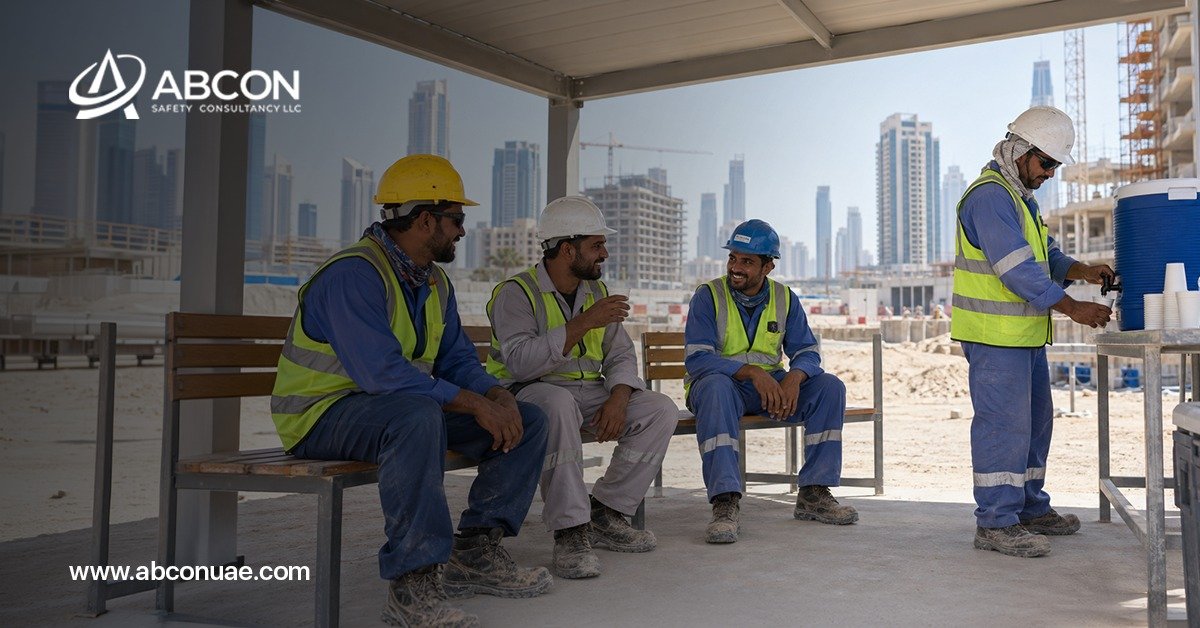
Provide shaded rest areas where outdoor workers can shelter during breaks and downtime
Supply adequate drinking water and rehydration solutions, including electrolyte or rehydration products alongside plain water
Maintain first aid readiness for heat-related illness, including trained first aiders and accessible heat stress first aid supplies
Display the midday break rules prominently at the worksite, in a language workers understand
Keep documentation current, including working hour records, in case of a MOHRE inspection or worker complaint
What's Exempt From the Midday Break?
A narrow set of activities are exempt, generally limited to work that is technically unsafe or impossible to interrupt mid-process — such as continuous concrete pouring or asphalt paving where stopping partway through would create a structural or safety risk itself. Employers relying on an exemption should be prepared to justify it clearly, since exemptions are interpreted narrowly, not treated as a general workaround for scheduling convenience.
Even exempted work still requires strict safety measures shaded rest provision, hydration, and heat stress monitoring don't disappear just because an activity is technically permitted to continue.
What Employers Must Do Before September 15
1. Confirm Compliance Through the Final Days
Enforcement inspections don't slow down as the ban approaches its end date if anything, the final week often sees continued or increased monitoring. Employers should ensure shift schedules, rest provisions, and documentation remain fully compliant right up until September 15, not just through the bulk of the summer.
2. Audit Documentation Before the Ban Closes
Confirm working hour records, midday break signage, and any exemption justifications are complete and accurate. If a worker complaint or MOHRE inspection occurs even after the ban technically ends, records from the ban period may still be reviewed.
3. Review Heat Stress Incidents From the Season
Before shifting attention away from summer heat management, review any heat-related incidents, near-misses, or worker complaints from the 2026 season. This creates a foundation for improving next year's heat safety plan rather than starting from scratch.
4. Plan the Transition Back to Standard Hours
Once September 15 passes, outdoor work can resume during previously restricted hours, but employers should plan this transition deliberately temperatures remain high well into September in many parts of the UAE, and a hard, sudden return to full midday hours without any tapering can still pose heat-related risk even outside the formal ban window.
5. Reinforce That the Duty of Care Doesn't End With the Ban
The Midday Break sets a legal minimum, not a ceiling on heat safety responsibility. Employers with a genuine safety culture continue monitoring for heat stress symptoms, encouraging hydration, and avoiding pressure on workers to push through dangerous conditions well beyond the formal ban dates.
Penalties for Non-Compliance
Employers found in violation of the Midday Break rule face fines of AED 5,000 per affected worker, rising to a maximum of AED 50,000 for repeated or larger-scale violations. Violations can be reported by workers or members of the public through official MOHRE channels, and enforcement has historically maintained a very high compliance rate across inspected companies, reflecting active and consistent monitoring throughout the ban period.
Best Practices Checklist for the Final Days of the 2026 Ban
Confirm all outdoor work still fully stops between 12:30 PM and 3:00 PM through September 15
Verify shaded rest areas, water, and rehydration supplies remain stocked and accessible
Ensure midday break signage is still displayed and legible at all applicable worksites
Complete and file working hour records for the full ban period
Document any exempted work with clear technical justification on file
Review the season's heat stress incidents to inform next year's planning
Plan a gradual, monitored transition back to full outdoor hours after September 15
Frequently Asked Questions
1. When does the UAE Midday Break ban end in 2026?
The ban runs through September 15, 2026, after which outdoor work is legally permitted to resume during the previously restricted 12:30 PM to 3:00 PM window, though employers should still monitor conditions given continued high temperatures.
2. What happens if a violation occurred earlier in the ban but is only reported near the end?
MOHRE can investigate and act on complaints or evidence relating to violations that occurred at any point during the ban period, meaning employers remain accountable for compliance throughout the full June 15 to September 15 window, not just the period immediately surrounding a complaint.
3. Do heat safety obligations end once the Midday Break period ends?
No while the specific midday work ban ends on September 15, the broader employer duty of care to provide a safe working environment and protect workers from foreseeable heat-related harm continues, particularly during the still-warm weeks that follow.
4. Are there specific hydration requirements beyond plain drinking water?
Yes employers are expected to provide approved electrolyte or rehydration solutions in addition to plain water, ensuring workers have access to products suitable for daily consumption throughout the ban period.
5. Can workers refuse to work during the banned hours?
Yes workers have the right to decline outdoor work during the 12:30 PM to 3:00 PM ban window without facing disciplinary action, and employers who pressure staff to continue working during this period are in direct violation of the rule.
Final Thoughts: The Final Days Matter Just as Much as the First
It's easy to treat the last few days of the Midday Break as a formality once most of the summer's compliance work is behind you, but enforcement doesn't taper off just because the calendar is closing in on September 15. Employers who stay disciplined through the final stretch and who start thinking now about next year's heat safety planning are the ones who avoid last-minute penalties and build a genuinely safer summer operation year over year.
Need help auditing your heat safety compliance before the ban closes, or building a stronger plan for next season? Get in touch with ABCON Safety Consultancy for a compliance review tailored to your workforce and site conditions because worker safety doesn't end when the calendar date does.