'/%3E%3Cpath d='M30 0v30M0 15h60' stroke='%23FFF' stroke-width='10'/%3E%3Cpath d='M30 0v30M0 15h60' stroke='%23C8102E' stroke-width='6'/%3E%3C/svg%3E)
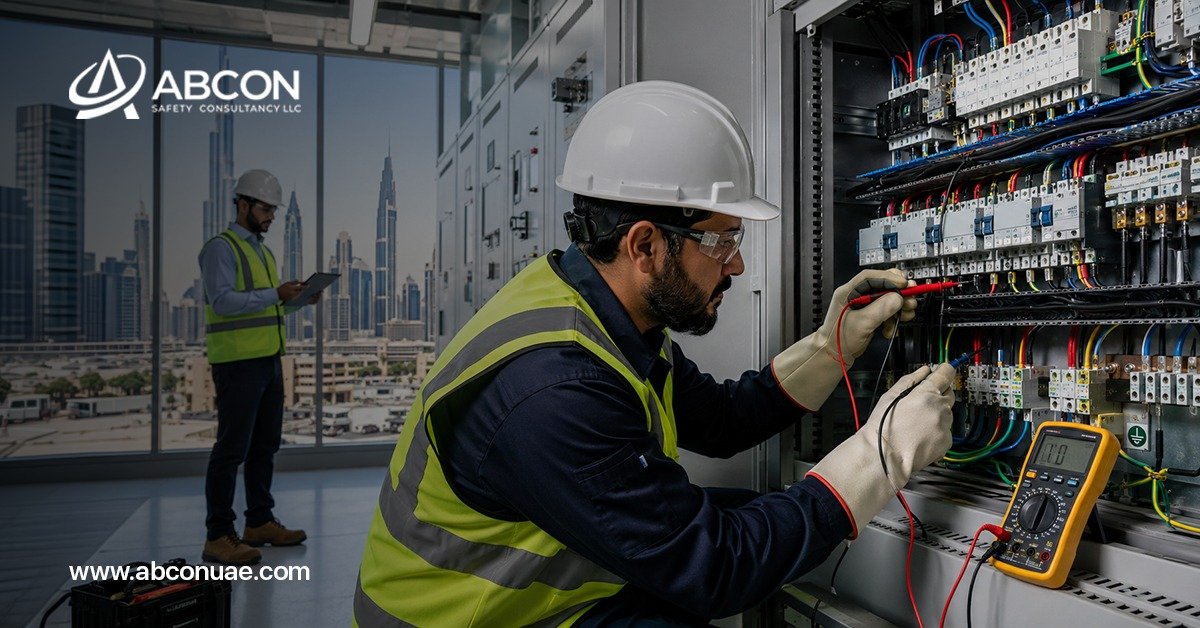
Electrical Integrity & Continuity Testing in UAE: A Complete Safety Overview
Explains electrical integrity testing (broad system check) vs. continuity testing (verifies unbroken earth/circuit paths) and why both matter for fire and shock prevention in UAE. Covers what a full survey includes (insulation resistance, earth loop impedance, RCD testing, etc.), a recommended testing frequency table by facility type, EIAC accreditation, a checklist, 5 FAQs, and a CTA to book a survey.
Explains electrical integrity testing (broad system check) vs. continuity testing (verifies unbroken earth/circuit paths) and why both matter for fire and shock prevention in UAE. Covers what a full survey includes (insulation resistance, earth loop impedance, RCD testing, etc.), a recommended testing frequency table by facility type, EIAC accreditation, a checklist, 5 FAQs, and a CTA to book a survey.
Introduction
Electrical systems don't usually fail without warning they degrade quietly, through corroded connections, damaged insulation, and broken earthing paths, until a fault, a shock hazard, or a fire finally forces attention. Electrical integrity and continuity testing exists to catch that degradation early, before it becomes an incident.
For UAE facility managers, safety officers, and business owners, this isn't just good practice it's a documented requirement that regulators, insurers, and civil defence authorities increasingly expect to see as part of routine risk management. Yet many businesses only think about electrical testing after an incident, a failed audit, or an insurance claim gets complicated.
This guide breaks down what electrical integrity and continuity testing actually involves, why it's essential for UAE workplace safety, and how to build it into a proper maintenance and compliance schedule.
What Is Electrical Integrity Testing?
Electrical integrity testing is a broad inspection and testing process that verifies whether an electrical installation is safe, compliant, and fit for continued use. It typically combines visual inspection with a series of standardized electrical tests to confirm that wiring, earthing, insulation, and protective devices are all performing as designed.
The goal isn't just to find faults that already exist it's to identify components that are trending toward failure, so they can be addressed through planned maintenance rather than emergency repair.
What Is Continuity Testing?
Continuity testing is a specific, focused test within the broader integrity testing process. It verifies that a conductor such as an earth wire or a circuit path provides a complete, unbroken electrical path with no unexpected breaks, high resistance points, or loose connections.
In practical terms, continuity testing confirms that:
Earth bonding conductors are properly connected end-to-end
Circuit protective conductors maintain a low-resistance path back to the main earthing terminal
No hidden breaks exist in wiring that would otherwise appear functional under normal load
A broken or high-resistance earth path is particularly dangerous because it can remain completely invisible during normal operation — the fault only becomes apparent during a shock event or a fire, when the protective earthing fails to do its job.
Why Electrical Integrity & Continuity Testing Matters in the UAE
1. Fire Prevention
A significant share of electrical fires trace back to degraded insulation, loose connections, or earth faults that integrity testing is specifically designed to catch before they escalate.
2. Shock and Electrocution Risk
Continuity testing directly verifies that earthing systems will function correctly during a fault condition — the single factor that determines whether a fault trips a breaker safely or results in a live exposed surface.
3. High Ambient Temperatures Accelerate Degradation
The UAE's climate places additional thermal stress on cabling, insulation, and connections year-round, which can accelerate the kind of gradual degradation that integrity testing is designed to detect.
4. Regulatory and Insurance Expectations
Civil defence authorities and UAE insurers increasingly expect documented evidence of periodic electrical testing as part of fire risk management and policy compliance, particularly for commercial, industrial, and high-occupancy buildings.
5. Supports ISO 45001 and Broader HSE Compliance
Electrical integrity testing feeds directly into the hazard identification and risk control requirements of management systems like ISO 45001, giving safety officers documented evidence that electrical risk is being actively managed, not assumed.
What a Professional Electrical Integrity & Continuity Testing Survey Includes
Visual inspection — checking for visible damage, corrosion, overheating signs, and non-compliant installations
Earth continuity testing — confirming unbroken, low-resistance earth paths throughout the installation
Insulation resistance testing — verifying that insulation between conductors and earth meets minimum safe resistance values
Polarity testing — confirming that switches and protective devices are correctly wired into the live conductor, not the neutral
Earth fault loop impedance testing — verifying that protective devices will operate quickly enough during a fault to prevent dangerous voltage exposure
RCD (Residual Current Device) testing — confirming that residual current devices trip within required time and current thresholds
Documented reporting — a certified report classifying findings by severity (satisfactory, requires improvement, unsatisfactory/dangerous) with clear remedial recommendations
An EIAC-accredited safety consultancy conducting this testing ensures the resulting report holds regulatory and insurance weight — an informal or unaccredited check may identify the same issues but won't carry equivalent standing during an audit or claim review.
How Often Should Electrical Integrity Testing Be Scheduled?
Facility Type | Recommended Frequency |
|---|---|
Industrial and manufacturing facilities | Annually |
Commercial buildings (offices, retail) | Every 1–3 years, depending on age and load |
Hotels and hospitality | Annually, aligned with civil defence renewal |
Residential buildings (common areas, shared systems) | Every 3–5 years |
Construction sites (temporary installations) | Every 3 months, or per phase change |
After major electrical modification or incident | Immediately following the work or event |
Older buildings, high-load facilities, and sites with a history of electrical faults should default to the shorter end of these intervals rather than the longer one.
Best Practices Checklist Before Booking Electrical Integrity Testing
Confirm the provider is EIAC-accredited for electrical inspection and testing
Request a full scope covering continuity, insulation resistance, earth loop impedance, and RCD testing — not a partial check
Ensure the report classifies findings by severity with clear remedial timelines
Ask whether follow-up verification testing is included after remedial work
Confirm the report format satisfies your insurer's or civil defence documentation requirements
Set a recurring testing schedule rather than relying on reactive, incident-driven checks
Frequently Asked Questions
1. What is the difference between continuity testing and insulation resistance testing?
Continuity testing confirms an unbroken, low-resistance path along a conductor (commonly earth bonding), while insulation resistance testing measures how well insulation prevents current from leaking between conductors or to earth. Both are typically performed together as part of a full electrical integrity survey.
2. Is electrical integrity testing mandatory in the UAE?
Requirements vary by emirate, free zone, and building type, but civil defence authorities and many insurers expect documented periodic testing as part of fire and electrical risk management, particularly for commercial and industrial facilities.
3. Does electrical integrity testing require a power shutdown?
Some tests, like insulation resistance testing, do require the circuit to be de-energized, while others, like thermal-related visual checks, can be conducted live. A qualified provider will plan testing to minimize operational disruption.
4. How long does a full electrical integrity testing survey take?
Duration depends on facility size and the number of circuits and distribution boards involved, ranging from a few hours for a small commercial unit to several days for a large industrial site.
5. What happens if continuity testing finds a broken earth path?
This is typically classified as an urgent or dangerous finding requiring immediate remedial action, since a broken earth path removes a critical layer of shock and fire protection. A follow-up test confirms the repair has restored a compliant path.
Final Thoughts: Testing Turns Invisible Risk Into a Manageable Task
Electrical faults that lead to fires or shock incidents are rarely sudden they're the end result of gradual degradation that went undetected because no one was looking for it. Electrical integrity and continuity testing turns that invisible risk into a documented, scheduled maintenance item, giving you both a safer facility and the paperwork to prove it during an audit, insurance review, or civil defence inspection.
Ready to have your facility's electrical systems tested by an EIAC-accredited team? Get in touch for a comprehensive electrical integrity and continuity testing survey tailored to your facility type and risk profile because a documented safe system beats an assumed one every time.